Sri Maha Bodhi
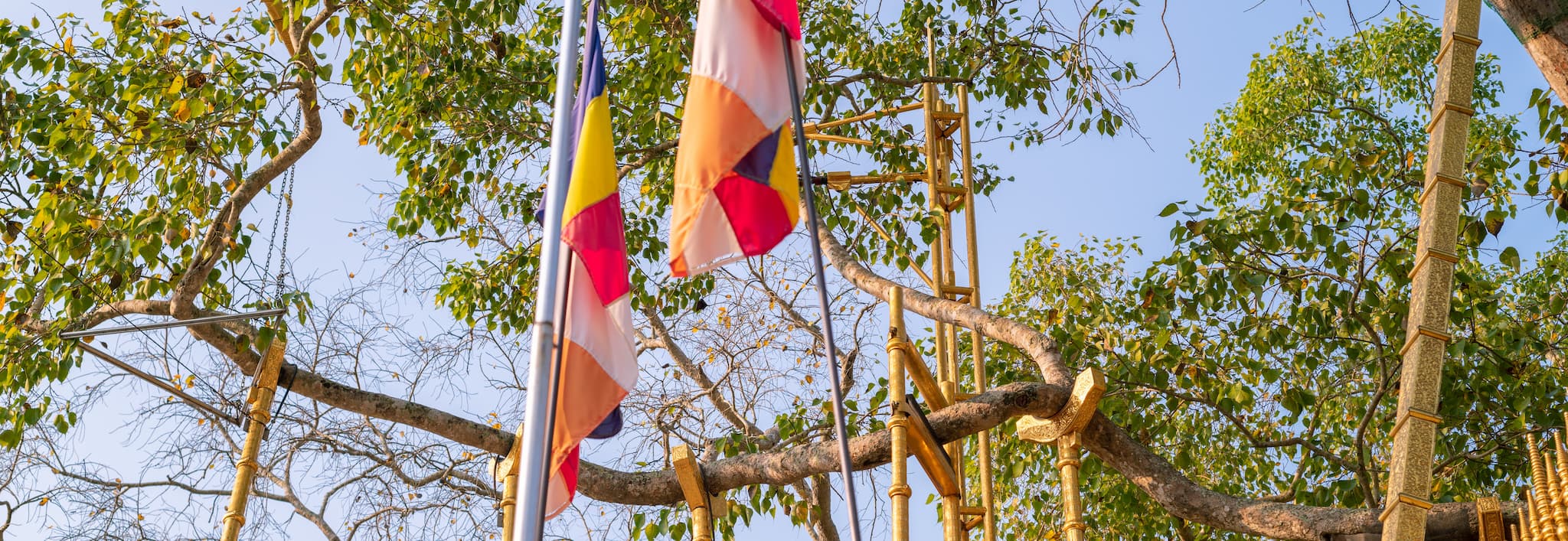
A sacred fig tree (Ficus religiosa) in Anuradhapura, Sri Lanka, said to be a sapling from the original Bodhi tree in Bodh Gaya under which the Buddha attained enlightenment. Planted in 288 BC, it is the oldest living human-planted tree in the world with a known planting date.
History
Over 2,300 years of continuous devotion
In 288 BC, Princess Sangamitta, daughter of Emperor Ashoka of India, brought a southern branch of the original Bodhi tree from Bodh Gaya to Sri Lanka at the invitation of King Devanampiyatissa.
The sapling was planted in the Mahamewna Gardens of Anuradhapura, the capital of the ancient Sinhalese kingdom, in a grand ceremony attended by the king and thousands of devotees.
The tree has been continuously guarded and tended for over 2,300 years, making it the oldest historically documented tree in existence. Royal guards were appointed to protect it throughout the centuries.
When the original Bodhi tree in Bodh Gaya, India, was destroyed by King Pushyamitra Sunga in the 2nd century BC, the Sri Maha Bodhi became the primary living link to the Buddha's enlightenment.
The tree has survived multiple invasions, including attacks by South Indian Chola forces. Despite damage, it has regenerated and remains a living testament to Buddhist devotion.
King Kirthi Sri Meghavanna (301–328 AD) built a high wall around the tree and assigned a dedicated guard. This tradition of protection continues to the present day.
Today, the Sri Maha Bodhi is one of the most venerated Buddhist pilgrimage sites in the world, attracting millions of devotees and visitors annually.
Opening Hours
Best to visit early morning or evening for puja ceremonies
Expect very large crowds; special ceremonies held throughout the day
When to Visit
The dry season offers clearer skies and more comfortable temperatures for exploring the sacred area. Early morning (before 8 AM) and late afternoon (after 4 PM) are ideal for avoiding the midday heat. Poya days offer a deeply spiritual experience but come with significant crowds. The Poson Poya (June full moon) is particularly special as it commemorates the arrival of Buddhism to Sri Lanka.
What to Wear
- White or light-colored clothing is strongly recommended and shows respect at the sacred site.
- Shoulders must be fully covered — no tank tops or sleeveless shirts.
- Knees must be covered — wear long trousers, skirts below the knee, or sarongs.
- Remove shoes and hats before entering the sacred area around the tree. There are shoe-keeping areas available.
- Avoid leather items such as belts and bags within the sacred precinct.
- Modest, clean attire is expected. Avoid bright or flashy clothing.
Getting There
Distance and transport from nearby railway stations
Anuradhapura New Town Railway Station
Transport Options
Anuradhapura Old Town Railway Station
Transport Options
Location Map
Photo Gallery
Visual highlights of Sri Maha Bodhi
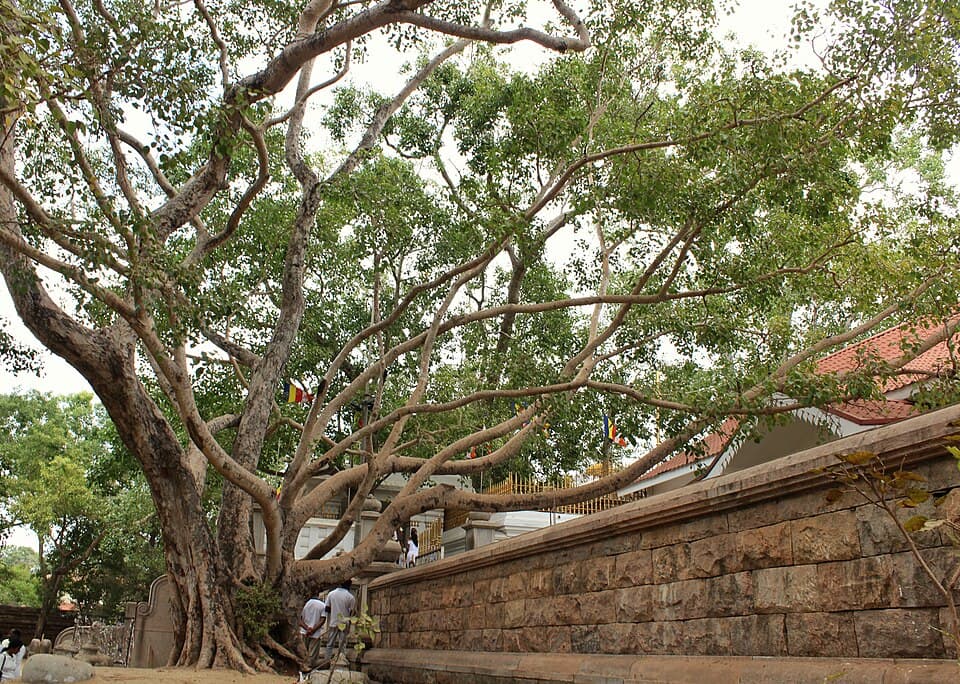
The sacred Sri Maha Bodhi, the oldest historically documented tree in the world
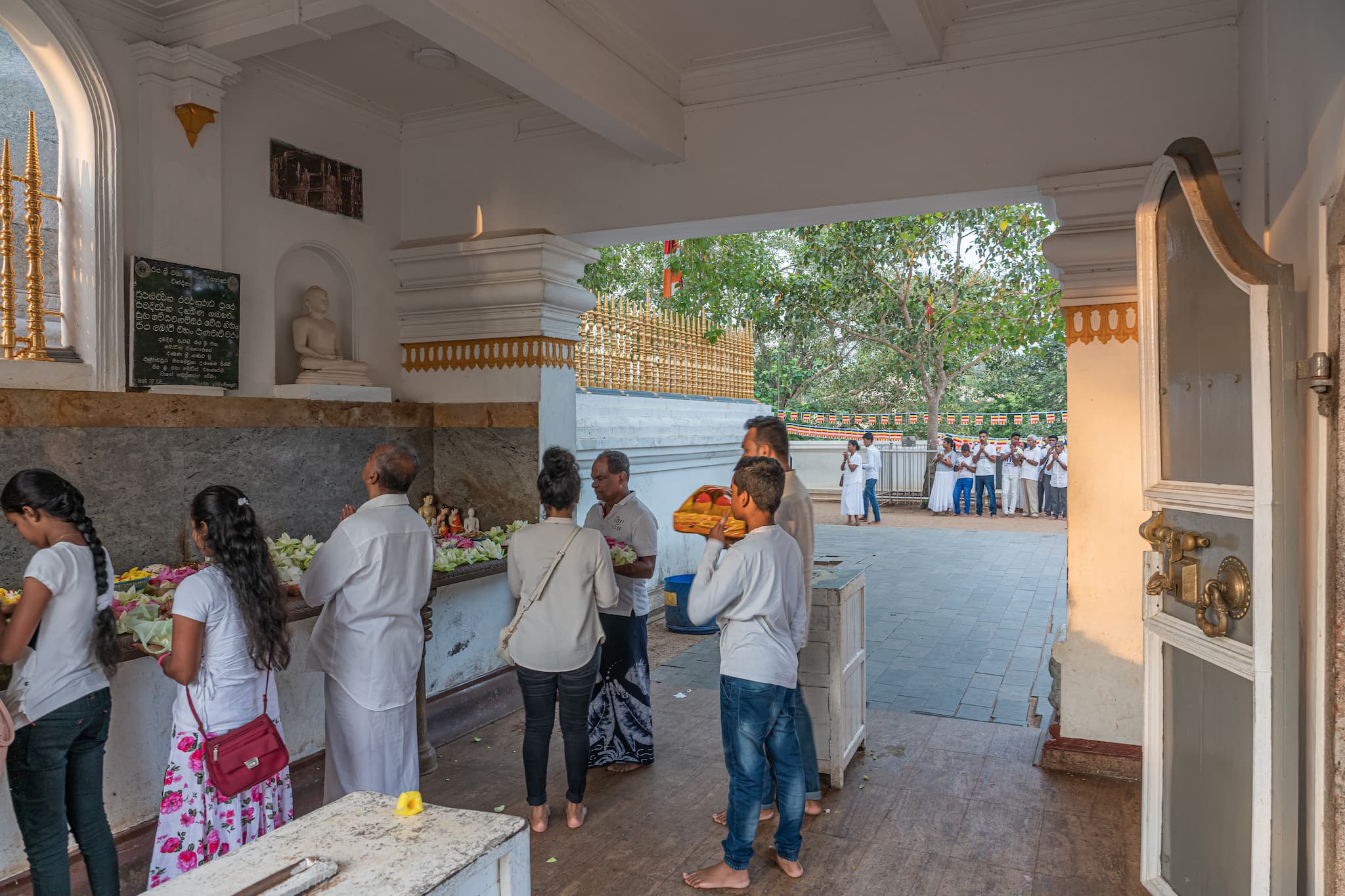
Buddhist devotees offering prayers at the sacred Bodhi tree
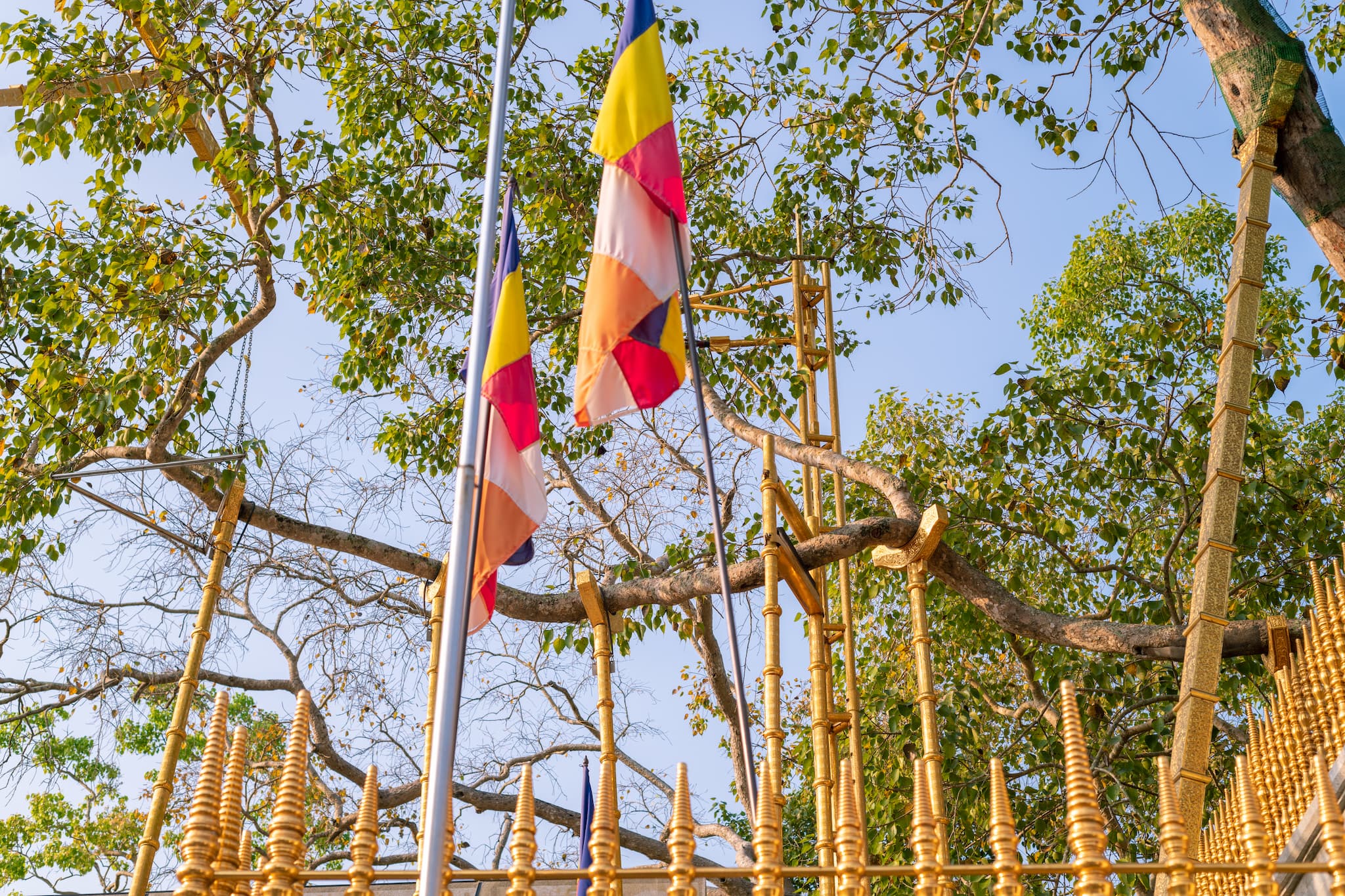
The ornate golden fence protecting the ancient sacred tree
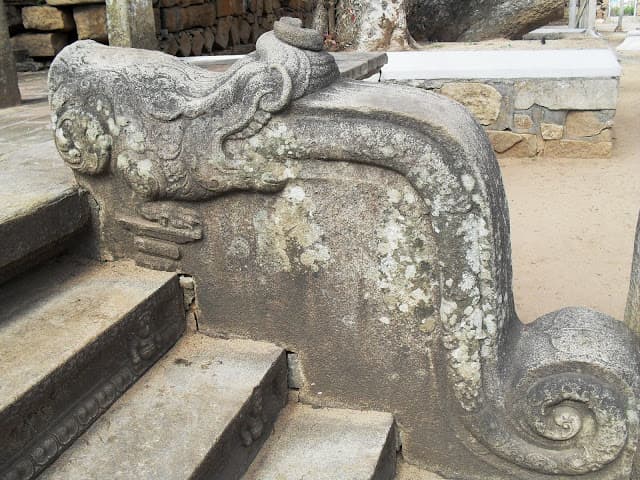
Intricate stone carvings and ancient guardstones at the entrance
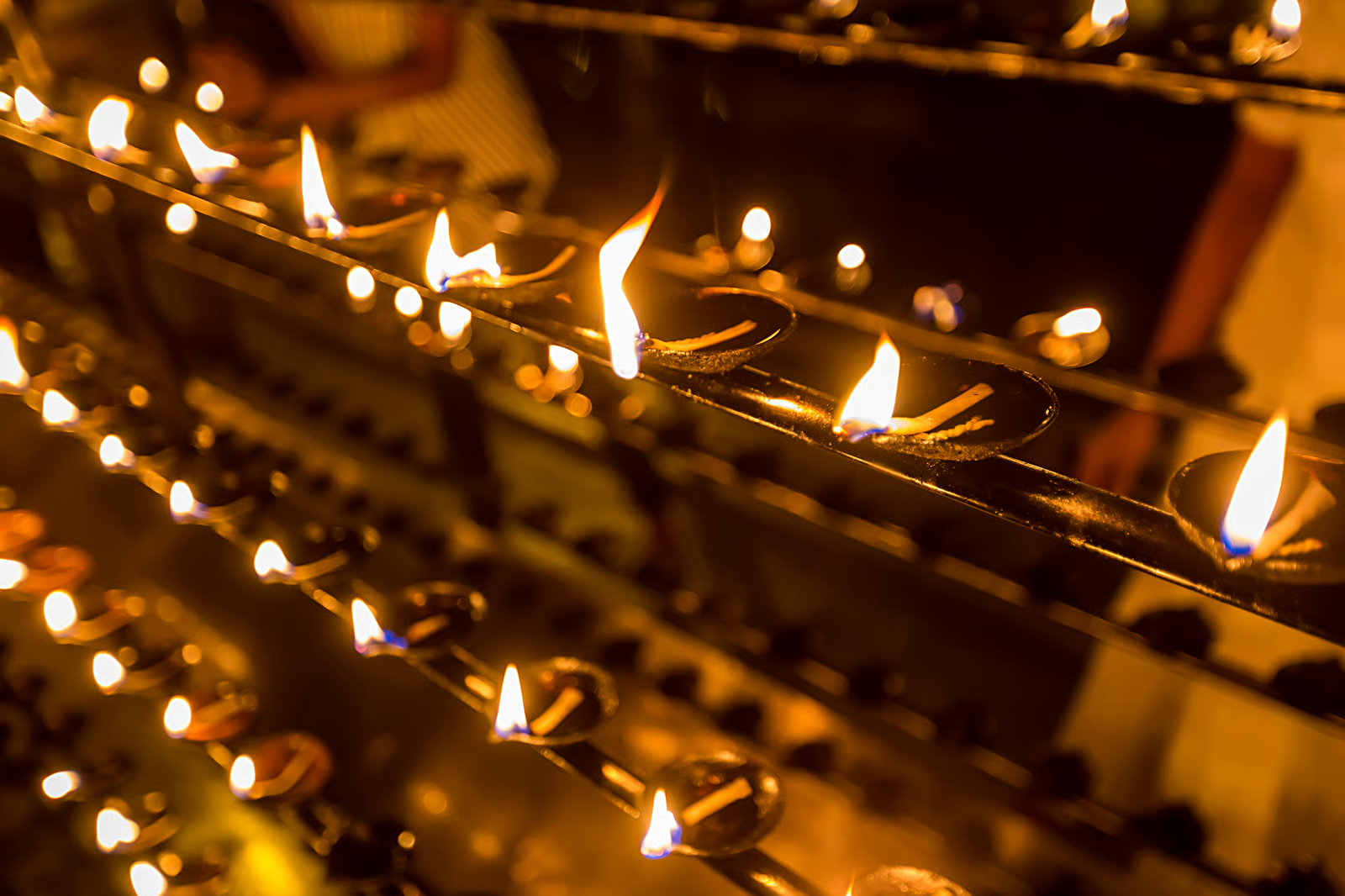
The atmospheric evening puja ceremony with oil lamps and incense
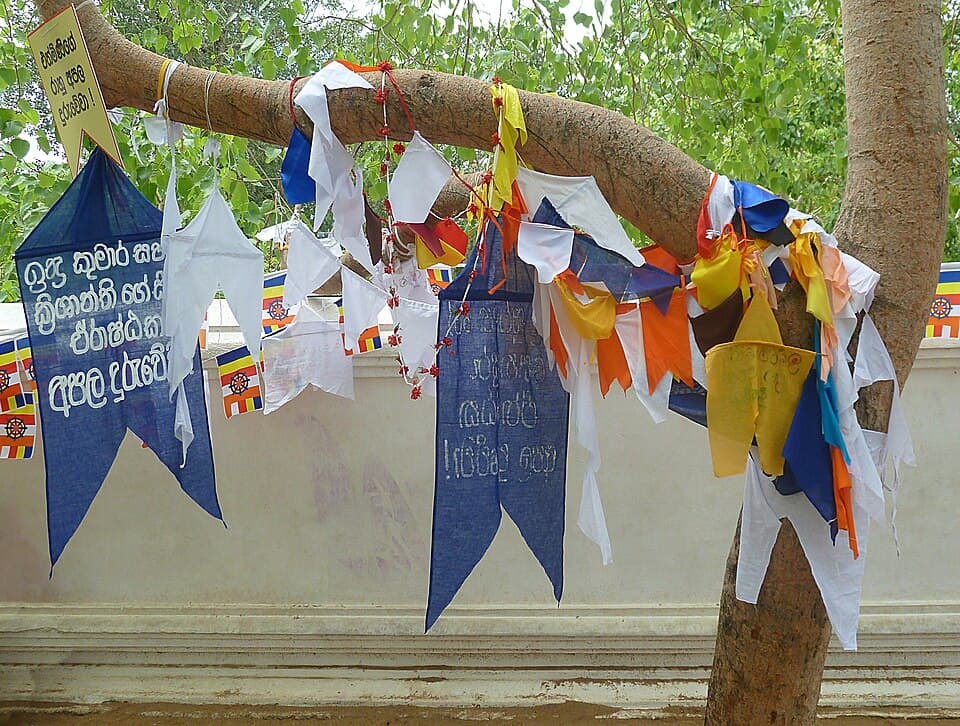
Prayer flags and offerings tied to a branch of the sacred Jaya Sri Maha Bodhi tree.
Nearby Attractions
Places to explore close to Sri Maha Bodhi
Ruwanwelisaya Stupa
300 m (5-minute walk)An iconic white stupa with a massive dome, one of the most sacred Buddhist sites in Sri Lanka. Built by King Dutugemunu in the 2nd century BC.
Lovamahapaya (Brazen Palace)
100 m (2-minute walk)Directly adjacent to Sri Maha Bodhi, this site once supported a nine-story monastic residence with a bronze roof. Now only the stone pillars remain.
Thuparamaya
1 km (15-minute walk)The oldest stupa in Sri Lanka, built in the 3rd century BC, enshrining the collarbone relic of the Buddha.
Isurumuniya
1.5 km (20-minute walk)A rock temple famed for its stone carvings, including the famous "Isurumuniya Lovers" sculpture.
Jetavanaramaya
1.5 km (20-minute walk)One of the largest brick structures in the ancient world, built by King Mahasena in the 3rd century AD.
Abhayagiri Monastery
2 km (25-minute walk)A vast monastic complex with stone carvings, ancient foundations, and a massive stupa.
What to Visit Next
Recommended stops after Sri Maha Bodhi
Ruwanwelisaya Stupa
Just a 5-minute walk away, this is the natural next stop. The golden-hour light on the white stupa is breathtaking.
Lovamahapaya (Brazen Palace)
Literally adjacent to Sri Maha Bodhi, the 1,600 stone pillars are an awe-inspiring sight.
Thuparamaya
A short walk north takes you to Sri Lanka's oldest stupa, completing the sacred trio.
Mihintale
About 13 km east of Anuradhapura, this is where Buddhism was introduced to Sri Lanka. A half-day trip pairs well with the sacred city.
Important to Know
Essential considerations before your visit
Photography is allowed in the outer areas but may be restricted close to the sacred tree. Always check with temple authorities and follow posted signs.
Poya days (full moon) are extremely crowded with devotees. If you seek a quiet, contemplative visit, choose a regular weekday.
Monkeys inhabit the temple grounds and can be bold. Keep belongings secure, especially food, sunglasses, and cameras.
Bring flower offerings (lotus flowers, jasmine) and incense if you wish to participate in worship. These can be purchased from vendors near the entrance.
The sacred area can be very hot during midday. Carry water and stay hydrated, but consume food and drinks away from the sacred precinct.
Maintain silence and respectful behaviour near the tree. This is an active place of worship, not just a tourist attraction.
An entrance fee applies for foreign visitors (approximately LKR 200 or included in the Anuradhapura Sacred City ticket of USD 25).
Guided tours are available and highly recommended for understanding the rich history. English-speaking guides can be hired at the entrance.
Security checks are in place at the entrance. Large bags may need to be left at the security checkpoint.
Entry Fees
- Foreign visitors: USD 25 (Sacred City combined ticket covering all major sites in Anuradhapura)
- Local visitors: LKR 50
- Children under 12: Free (with accompanying adult)
- SAARC country nationals: USD 15
Facilities Available
- Shoe-keeping area near the entrance (free)
- Clean washrooms available near the main entrance
- Small shops selling flowers, incense, and religious items
- Drinking water fountains in the outer compound
- Wheelchair-accessible pathways to the main viewing area
Religious Significance
- One of the three most sacred Buddhist pilgrimage sites in Sri Lanka
- The tree is a direct descendant of the original Bodhi tree under which Siddhartha Gautama attained enlightenment
- Continuous worship for over 2,300 years without interruption
- The site is managed by the Atamasthanadhipathi of Anuradhapura
Signature Experiences
- Attend the early morning puja (5:30 AM) for the most serene and spiritual experience
- Join the evening oil lamp ceremony when hundreds of clay lamps illuminate the sacred area
- Walk the pradakshina (circumambulation) path around the tree with devotees
- Visit during Poson Poya (June) for the most significant Buddhist celebration at this site
- Hire a knowledgeable guide to learn the full 2,300-year history of the tree and surrounding kingdom
Travel Tips
- Arrive before 6 AM for the quietest, most atmospheric experience with cool temperatures.
- Wear white clothing to blend in respectfully with local devotees.
- Bring a small mat or towel to sit on during meditation or prayer.
- Visit on a weekday to avoid the weekend and Poya day crowds.
- Combine with Ruwanwelisaya and Lovamahapaya for a complete sacred walking circuit.
- Carry small denomination LKR notes for offerings and purchases from local vendors.
Plan Your Visit to Sri Maha Bodhi
Include this sacred site in your personalized Sri Lanka itinerary