Mihintale
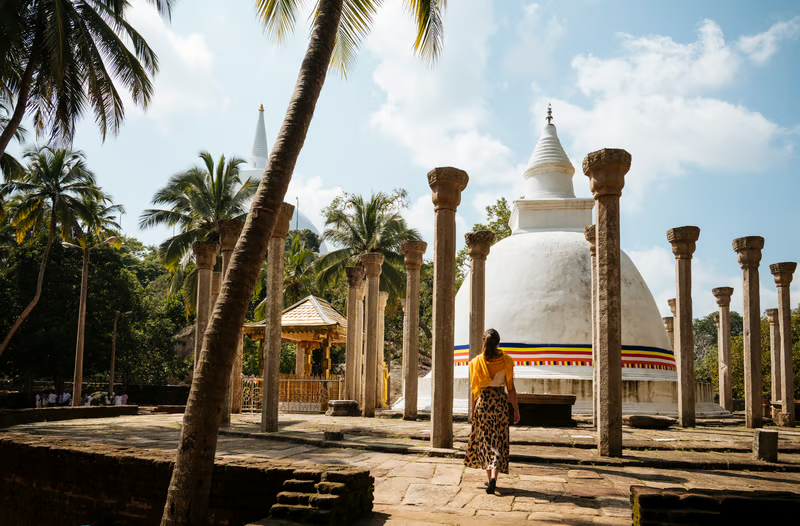
Mihintale is a sacred hilltop complex where Buddhism was first introduced to Sri Lanka. The site blends rock temples, stupas, monastic ruins, and panoramic viewpoints, reached by a grand stone stairway and surrounded by forested serenity.
History
Over 2,300 years of continuous devotion
Mihintale is traditionally regarded as the place where Arahat Mahinda met King Devanampiyatissa in the 3rd century BC, marking the introduction of Buddhism to Sri Lanka.
A hilltop monastery grew here with stupas, meditation caves, and monastic facilities that served pilgrims and monks for centuries.
The central dagoba, known as the Maha Stupa, became a major pilgrimage focus, while nearby structures like the Kantaka Chetiya and Ambastala Dagoba preserved early architectural styles.
The complex was supported by royal patronage, including water systems, stone steps, and stone hospital ruins that hint at sophisticated ancient planning.
Today, Mihintale remains a living pilgrimage site, especially revered during Poson Poya when the arrival of Buddhism is celebrated.
Opening Hours
Arrive early or late afternoon to avoid heat on the stair climb.
Major pilgrimage day with special ceremonies and very large crowds.
When to Visit
The dry season brings clearer views and easier climbs. Sunrise and late afternoon are ideal for cooler temperatures and golden light on the stupas.
What to Wear
- Modest clothing is required — cover shoulders and knees.
- Light, breathable fabrics are best for the hill climb.
- Remove shoes and hats at sacred areas.
- Avoid leather items within the temple precinct.
Getting There
Distance and transport from nearby railway stations
Anuradhapura New Town Railway Station
Transport Options
Anuradhapura Old Town Railway Station
Transport Options
Location Map
Photo Gallery
Visual highlights of Mihintale
Mihintale’s hilltop stupas and terraces at golden hour
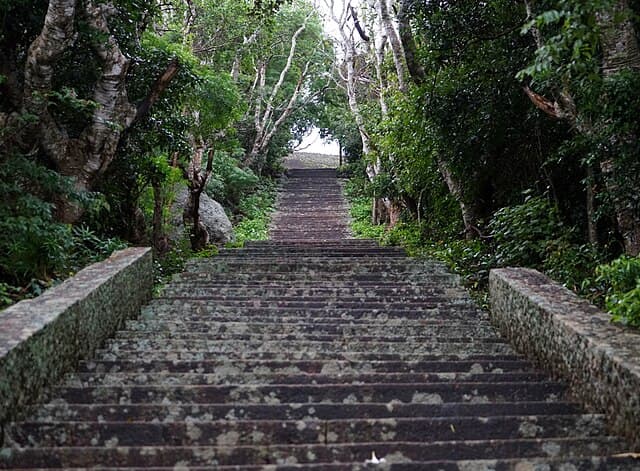
The long stone stairway that leads pilgrims to the summit
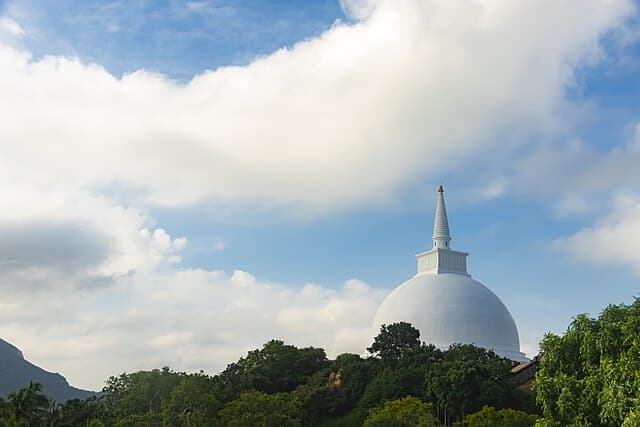
Ambastala Dagoba, the traditional meeting place of Arahat Mahinda and the king
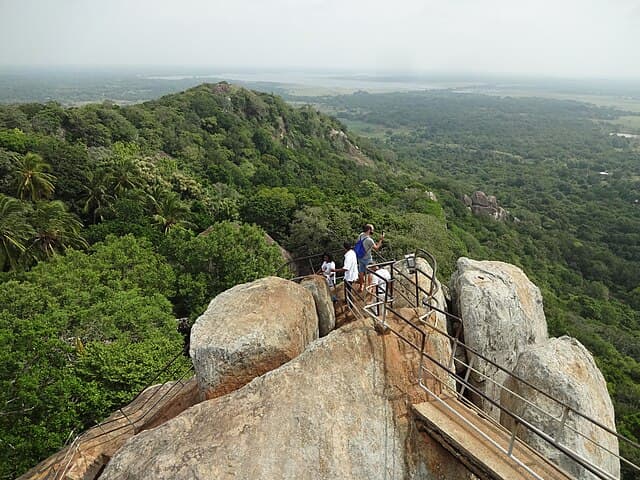
Sweeping views of Anuradhapura’s plains from the upper terraces
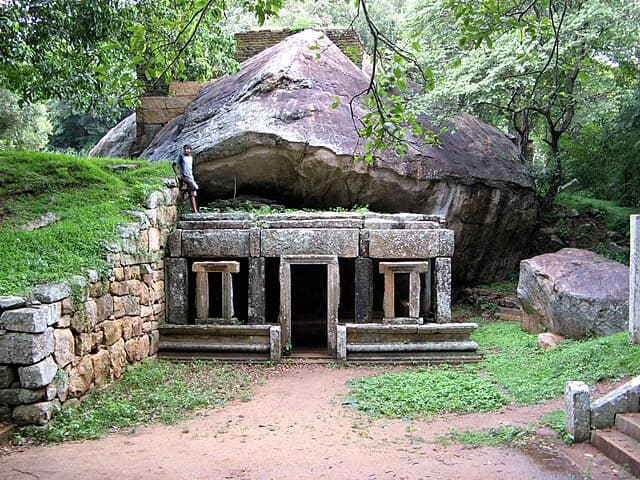
Ancient cave shrine among the rocks at Mihintale.
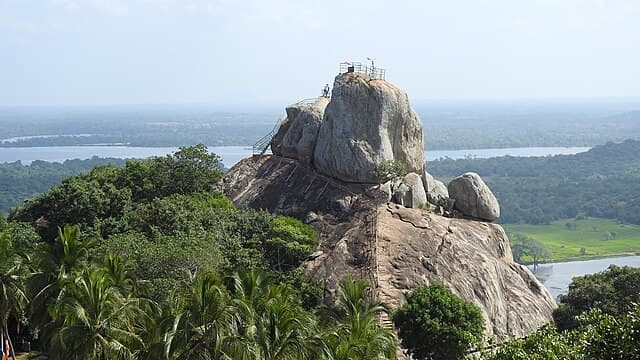
Forest-fringed landscapes surrounding the sacred hill
Nearby Attractions
Places to explore close to Mihintale
Anuradhapura Sacred City
14 km (30-minute drive)The UNESCO-listed sacred city with iconic stupas, monastic ruins, and the Sri Maha Bodhi.
Ruwanwelisaya Stupa
15 km (35-minute drive)The great white stupa of Anuradhapura and one of the most revered pilgrimage sites in Sri Lanka.
Sri Maha Bodhi
14 km (30-minute drive)The oldest historically documented tree in the world and a major Buddhist pilgrimage site.
Isurumuniya
13 km (30-minute drive)A rock temple famous for its ancient carvings, including the “Isurumuniya Lovers.”
What to Visit Next
Recommended stops after Mihintale
Anuradhapura Sacred City
Pair Mihintale with the main sacred city for a complete historical and spiritual circuit.
Ruwanwelisaya Stupa
Continue the pilgrimage theme with Sri Lanka’s most iconic stupa.
Sri Maha Bodhi
Visit the sacred Bodhi tree, a direct descendant of the Buddha’s enlightenment tree.
Important to Know
Essential considerations before your visit
The climb includes over 1,800 steps; bring water and take breaks.
The granite steps can be hot at midday — early or late visits are best.
Wear socks if the stone is hot, but remove footwear in sacred zones.
Monkeys are common on the hill; do not bring food and keep valuables secure.
Photography is allowed outdoors, but be respectful during ceremonies.
Entry Fees
- Foreign visitors: commonly around LKR 1,500–2,000; confirm at the ticket office.
- SAARC nationals: discounted rates may apply.
- Local visitors: typically a nominal fee or donation.
Facilities Available
- Shoe-keeping areas near sacred terraces
- Restrooms near the main entrance
- Small stalls selling water, snacks, and offerings
- Benches and shaded spots on the climb for rest breaks
Significance
- Recognized as the birthplace of Sri Lankan Buddhism
- Site of Arahat Mahinda’s historic meeting with King Devanampiyatissa
- Major pilgrimage destination, especially during Poson Poya
Signature Experiences
- Climb the grand stairway at sunrise for cooler air and panoramic views
- Visit Ambastala Dagoba and the meditation caves on the upper terraces
- Join Poson Poya celebrations to experience the most important festival here
- Combine with Anuradhapura’s sacred city for a full-day spiritual circuit
Travel Tips
- Start early to avoid heat and crowds on the steps.
- Carry at least 1L of water per person for the climb.
- Wear sturdy sandals or slip-on shoes for easy removal.
- Bring a light shawl or sarong for temple areas.
- Plan for at least 2–3 hours including rests and viewpoints.
Plan Your Visit to Mihintale
Include this sacred site in your personalized Sri Lanka itinerary