Abhayagiri Monastery
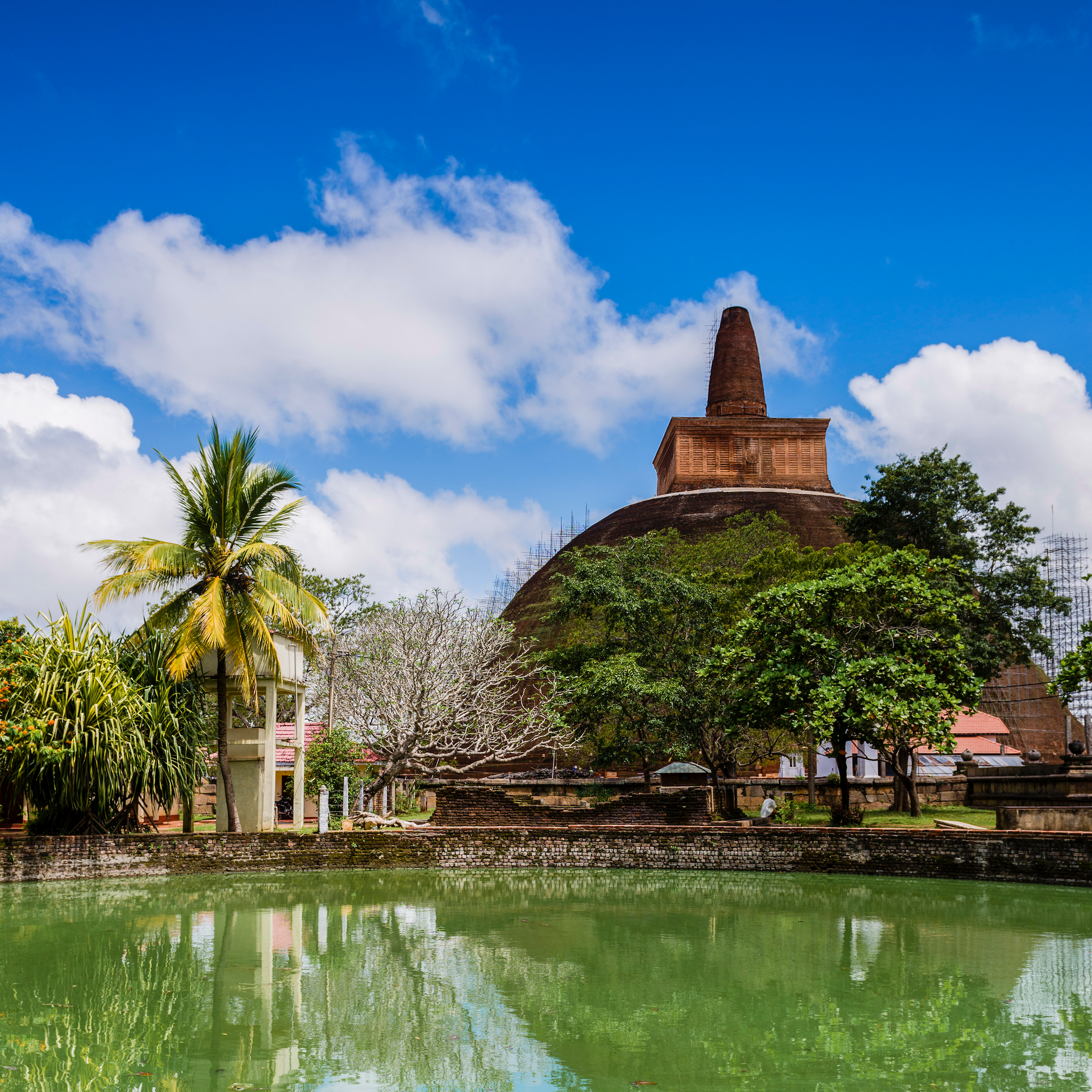
Abhayagiri Monastery is one of the largest monastic complexes of the ancient world, known for its monumental stupa, carved moonstones, and sprawling ruins. Once home to thousands of monks, it reflects the intellectual and spiritual heart of Anuradhapura’s golden age.
History
Over 2,300 years of continuous devotion
The monastery was founded in the 1st century BC during the reign of King Valagamba, marking a new era of monastic patronage in Anuradhapura.
Abhayagiri grew into a vast monastic city with halls, libraries, bathing ponds, and residential quarters, serving as a major center of scholarship and pilgrimage.
The complex is anchored by the Abhayagiri Stupa, once one of the tallest structures of the ancient world and a defining landmark of the sacred city.
Historical records suggest Abhayagiri attracted diverse Buddhist traditions and international visitors, contributing to a dynamic intellectual landscape.
Over time, invasions and political shifts led to decline, leaving the evocative ruins and sculpted stonework visible today.
Modern conservation efforts protect the site’s guardstones, moonstones, and inscriptions that reveal daily monastic life.
Opening Hours
Arrive early or late afternoon for cooler temperatures and softer light.
Expect larger crowds and ceremonial activity.
When to Visit
The dry season offers clearer skies for wide-angle views of the stupa and ruins. Early mornings are ideal for tranquil exploration, while late afternoons bring warm golden light across the stonework.
What to Wear
- Modest clothing is required — cover shoulders and knees.
- Light, breathable fabrics are best in the open, sunlit grounds.
- Remove shoes and hats when entering sacred terraces and shrine areas.
- Avoid leather items within religious precincts.
Getting There
Distance and transport from nearby railway stations
Anuradhapura New Town Railway Station
Transport Options
Anuradhapura Old Town Railway Station
Transport Options
Location Map
Photo Gallery
Visual highlights of Abhayagiri Monastery
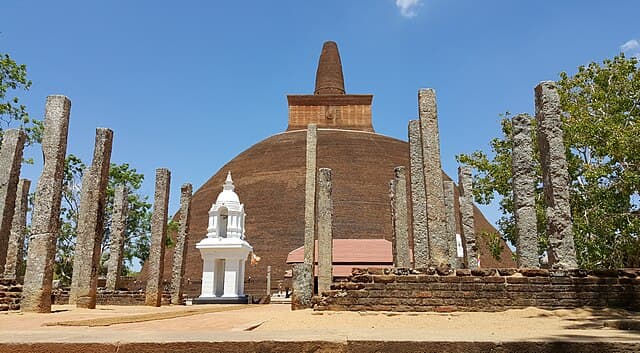
The majestic Abhayagiri Stupa rising above the sacred ruins of Anuradhapura.
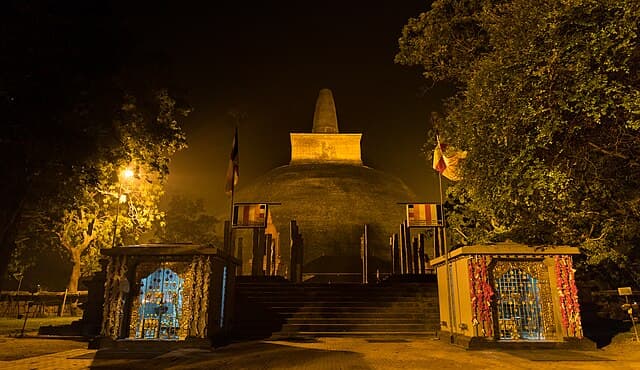
Golden lights illuminating the ancient Abhayagiri Stupa after sunset.
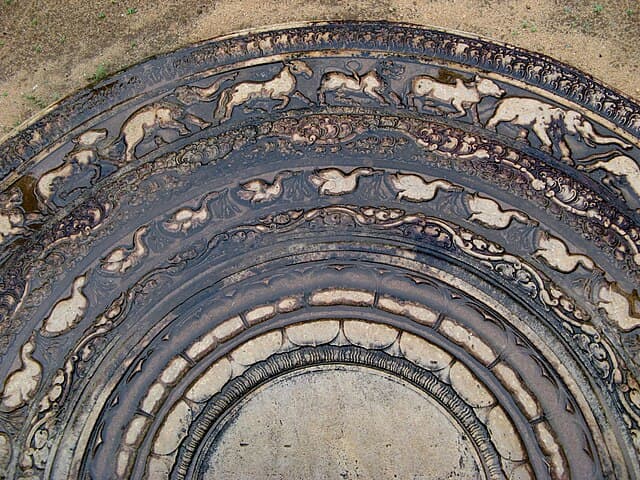
Intricate moonstone carvings welcoming pilgrims into the ancient monastery.
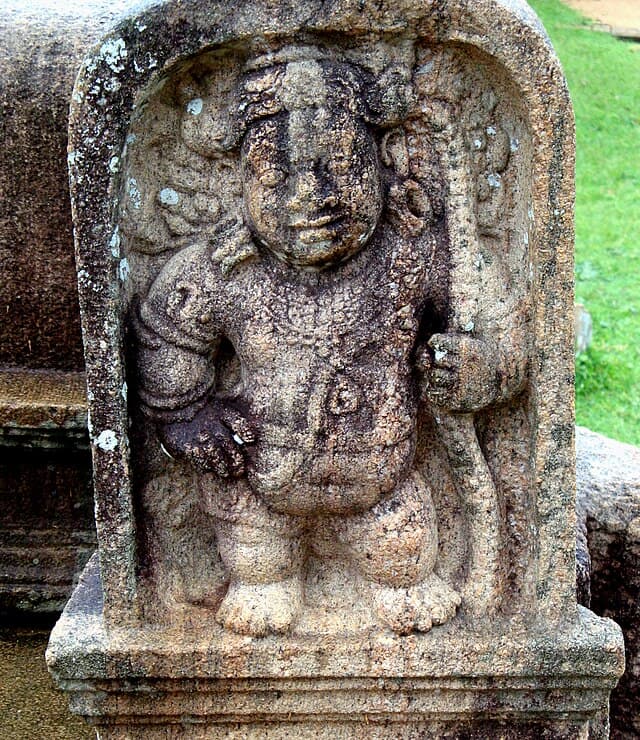
A guardian carved in stone standing watch at the entrance of Abhayagiri.
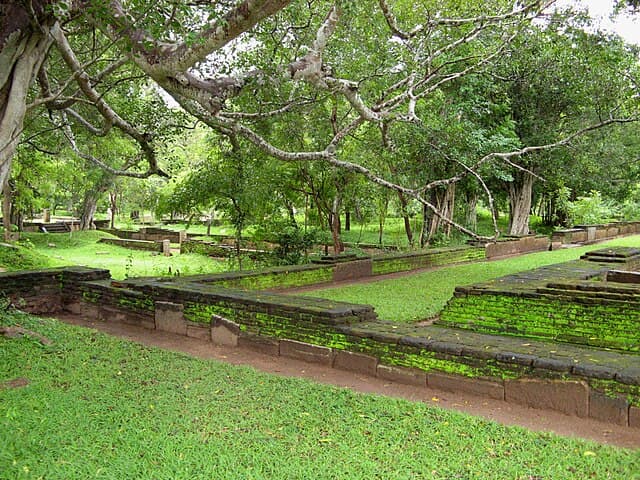
Ancient stone pathways weaving through the peaceful ruins of Abhayagiri Monastery.
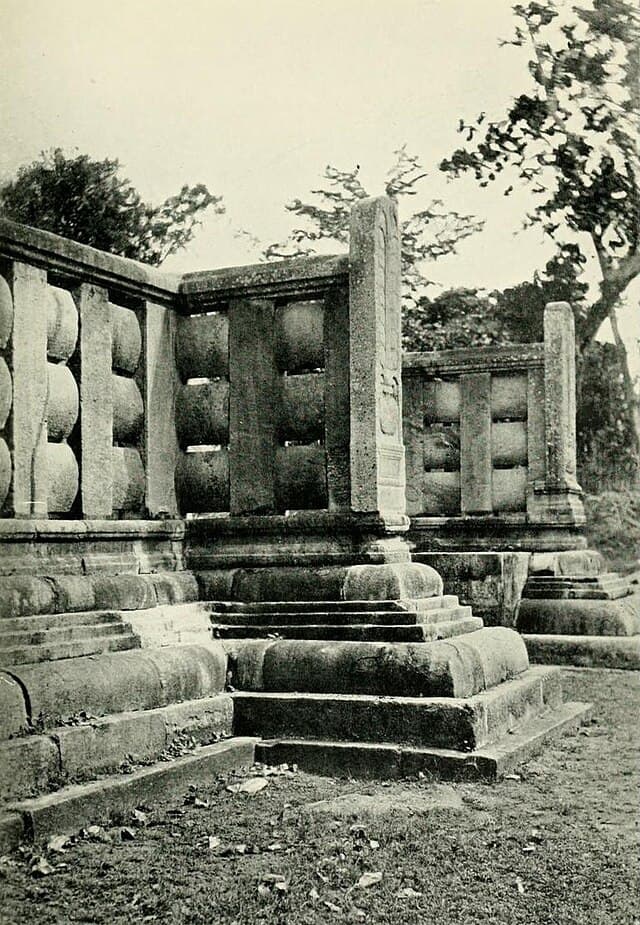
Historic stone railings surrounding the sacred grounds of Abhayagiri Vihara.
Nearby Attractions
Places to explore close to Abhayagiri Monastery
Jetavanaramaya
1 km (15-minute walk)A colossal brick stupa that once rivaled the tallest structures of the ancient world.
Kuttam Pokuna (Twin Ponds)
1 km (15-minute walk)Two beautifully engineered bathing ponds showcasing advanced ancient hydraulics.
Samadhi Buddha Statue
1.2 km (20-minute walk)A serene seated Buddha statue, one of the most admired sculptures in Sri Lanka.
Ruwanwelisaya Stupa
2 km (25-minute walk)The iconic white stupa and a major pilgrimage site within the sacred city.
Sri Maha Bodhi
2.2 km (30-minute walk)The sacred Bodhi tree, the oldest historically documented tree in the world.
What to Visit Next
Recommended stops after Abhayagiri Monastery
Jetavanaramaya
Just next door, the massive stupa adds scale and grandeur to the Abhayagiri circuit.
Kuttam Pokuna (Twin Ponds)
A short walk reveals the most impressive bathing ponds of ancient Anuradhapura.
Ruwanwelisaya Stupa
Continue to Sri Lanka’s most iconic white stupa for the classic sacred-city finale.
Sri Maha Bodhi
Pair the monastic ruins with the sacred Bodhi tree for a complete pilgrimage route.
Important to Know
Essential considerations before your visit
The grounds are expansive and sun-exposed; bring water and sun protection.
Stone paths can be uneven — wear sturdy sandals or shoes for walking sections.
Shoes must be removed at sacred terraces and shrine areas.
Monkeys are common around the ruins; keep bags zipped and food out of sight.
Photography is permitted outdoors, but avoid intrusive shots during worship.
Cyclists share some paths within the sacred city — stay alert on shared tracks.
Entry Fees
- Abhayagiri is generally covered under the Anuradhapura Sacred City ticket for foreign visitors.
- Recent ticket ranges for the Sacred City are commonly around LKR 1,500–2,000; confirm at the ticket office.
- SAARC nationals typically receive discounted rates; children under 12 are often free.
- Local visitors usually pay a nominal fee or donation.
Facilities Available
- Ticket office and information desk within the Sacred City zone
- Public washrooms near main access points
- Shaded rest areas and benches across the grounds
- Vendors selling water, snacks, and offerings
Significance
- One of the largest monasteries of the ancient Anuradhapura kingdom
- Home to the Abhayagiri Stupa, a defining monument of Sri Lankan Buddhist heritage
- Renowned center of learning and pilgrimage that attracted monks from across Asia
Signature Experiences
- Walk the processional route to the Abhayagiri Stupa and take in its massive scale
- Explore carved guardstones and moonstones that showcase refined stone artistry
- Visit the nearby Samadhi Buddha statue for a quiet, contemplative stop
- Cycle the sacred city loop with Abhayagiri as a central highlight
- Arrive at sunrise for soft light and a calm, uncrowded atmosphere
Travel Tips
- Start early to avoid heat and enjoy quieter paths through the ruins.
- Bring a light shawl or sarong to cover shoulders and knees as needed.
- Hire a guide if you want deeper context on monastic life and architecture.
- Allow 60–90 minutes to explore the main ruins and adjacent highlights.
- Pair with Jetavanaramaya and Kuttam Pokuna for a compact half-day circuit.
Plan Your Visit to Abhayagiri Monastery
Include this sacred site in your personalized Sri Lanka itinerary